

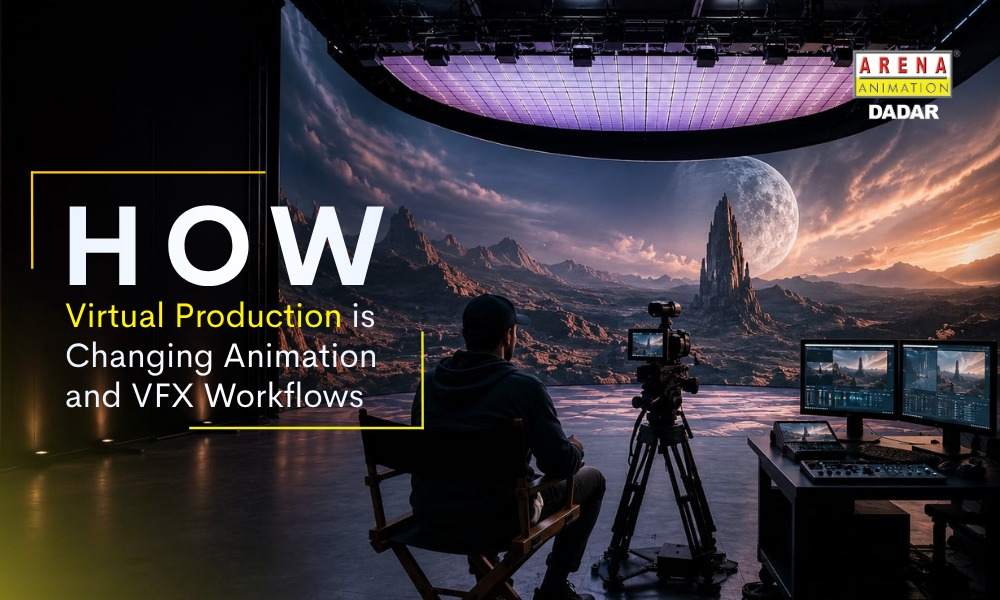
The animation and visual effects (VFX) industry has seen many technological advancements over the years. From traditional hand-drawn animation to computer-generated imagery (CGI), every innovation has transformed the way creative professionals work. Today, one of the biggest game changers in the industry is Virtual Production.
Virtual production is changing how animated films, television shows, advertisements, and visual effects projects are created. It combines real-time technology, digital environments, and advanced visualization tools to make production faster, more efficient, and more creative.
What is Virtual Production?
Virtual production is a filmmaking and content creation technique that uses real-time computer graphics and digital environments during the production process. Instead of waiting until post-production to see visual effects, creators can view and interact with digital scenes while they are working.
Technologies such as game engines, motion capture systems, LED walls, virtual cameras, and real-time rendering tools play a major role in virtual production. These tools allow artists, directors, and animators to make creative decisions much earlier in the workflow.
Traditional Animation and VFX Workflow
Before virtual production became popular, animation and VFX projects followed a long and complex process:
- Pre-production and planning
- Storyboarding
- Shooting live-action footage (if required)
- Creating visual effects
- Rendering scenes
- Post-production editing
This process often required multiple revisions and could take months to complete. Teams had to wait until later stages to see how the effects would look in the final project.
How Virtual Production Improves Workflows
1. Real-Time Visualization
One of the biggest benefits of virtual production is real-time visualization. Artists and directors can see digital assets, characters, environments, and effects instantly.
This helps teams identify mistakes early and make quick adjustments. Instead of waiting for long rendering times, creative decisions can be made on the spot.
2. Faster Production Process
Virtual production significantly reduces production time. Since many visual elements can be viewed and adjusted in real time, fewer revisions are needed during post-production.
This streamlined workflow helps studios complete projects faster while maintaining high-quality results.
3. Better Collaboration Between Teams
Animation and VFX projects often involve multiple departments working together. Virtual production creates a collaborative environment where animators, VFX artists, directors, and production teams can view the same scene simultaneously.
This improves communication and ensures everyone is working toward the same creative vision.
4. Improved Creative Freedom
Virtual production allows creators to experiment with different camera angles, lighting setups, and environments without major additional costs.
Artists can test ideas instantly and make creative changes before finalizing scenes. This flexibility leads to more innovative and visually impressive content.
5. Reduced Production Costs
While the initial setup of virtual production technology can be expensive, it often reduces overall project costs in the long run.
By minimizing reshoots, reducing post-production corrections, and improving workflow efficiency, studios can save both time and money.
Impact on the Animation Industry
The animation industry has greatly benefited from virtual production tools. Animators can now work with real-time rendering engines that provide instant feedback on character movements, lighting, and environments.
This allows animation teams to:
- Create scenes faster
- Improve animation quality
- Make creative decisions earlier
- Reduce rendering delays
- Enhance storytelling through better visualization
As a result, animated films and series can be produced more efficiently while maintaining high production standards.
Impact on the VFX Industry
Visual effects studios are also experiencing major improvements through virtual production.
Instead of creating every effect after filming, VFX teams can integrate digital elements during production. This makes it easier to match lighting, camera movements, and environmental details.
Benefits for VFX professionals include:
- Faster effect creation
- Better scene accuracy
- Reduced post-production workload
- Improved integration between live-action and CGI elements
- Enhanced realism in final outputs
These advantages help studios deliver stunning visual experiences while meeting tight deadlines.
The Future of Virtual Production
As technology continues to evolve, virtual production will become even more important in animation and VFX workflows. Artificial Intelligence (AI), real-time rendering engines, cloud computing, and advanced motion capture systems will further improve production speed and quality.
Many leading studios around the world are already investing heavily in virtual production technologies. As demand for high-quality digital content grows, professionals with virtual production skills will have excellent career opportunities in the animation and VFX industry.
Learn the Future of Animation and VFX
Students who want to build a successful career in animation, VFX, gaming, and digital content creation should stay updated with the latest industry technologies. Understanding virtual production workflows can provide a significant advantage in today’s competitive creative industry.
If you are looking to learn industry-relevant animation and VFX skills, Arena Animation Dadar, the best institute for animation, offers professional training programs designed to prepare students for modern production environments. With practical learning, expert guidance, and exposure to current industry trends, students can develop the skills needed for a successful career in the growing animation and VFX sector.
Conclusion
Virtual production is transforming the animation and VFX industry by making workflows faster, more collaborative, and more efficient. Real-time visualization, improved teamwork, reduced production costs, and greater creative freedom are helping studios produce high-quality content more effectively than ever before.
As the industry continues to adopt advanced technologies, virtual production will play an even bigger role in shaping the future of animation and visual effects, creating exciting opportunities for both professionals and aspiring artists.